The Role of AI in Smart Homes and Connected Living
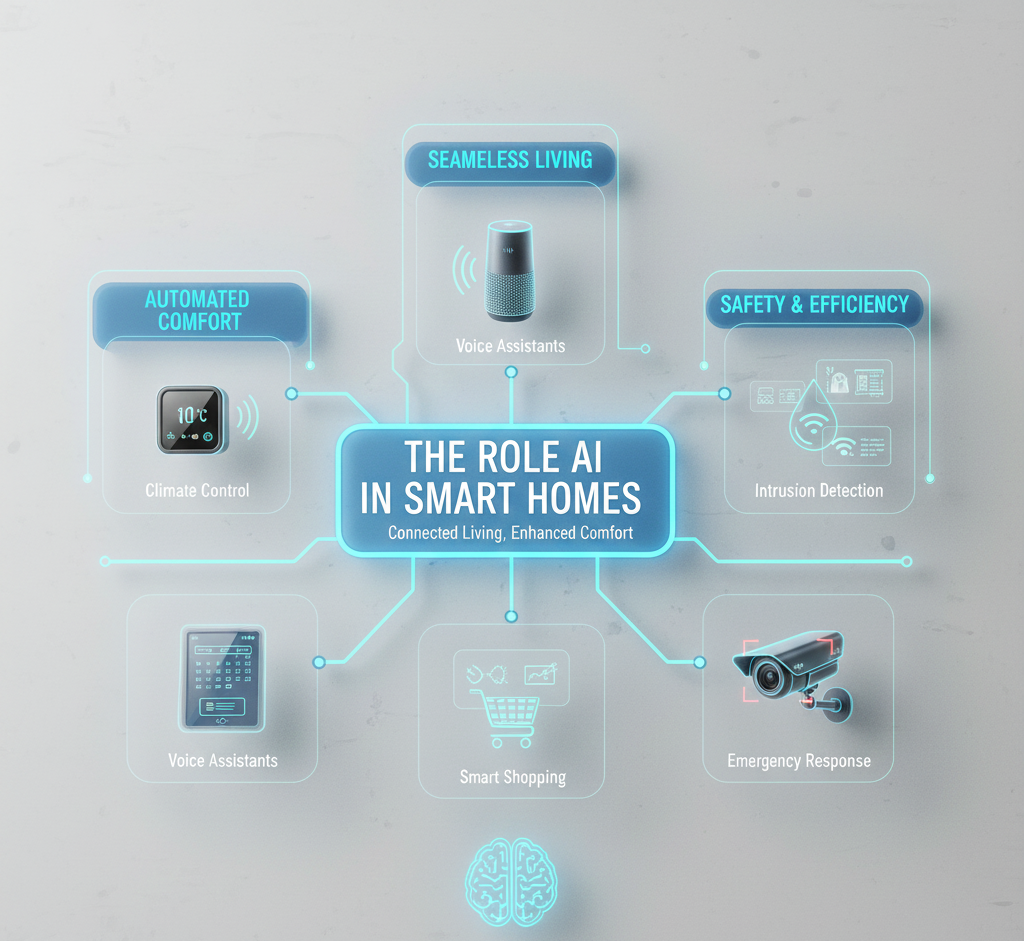
The Role of AI in Smart Homes and Connected Living
The use of artificial intelligence has become essential to contemporary smart homes, and it has revolutionized the manner in which individuals engage with their residential environments. Homeowners are now able to experience unprecedented levels of convenience, efficiency, security, and customized experiences by combining artificial intelligence with connected devices. Intelligent lighting systems, voice-controlled assistants, and predictive home maintenance are just a few of the artificial intelligence technologies that are transforming ordinary homes into adaptable, responsive environments that are able to anticipate and react to the requirements of the people who live there.
Automated Home with Intelligent Features
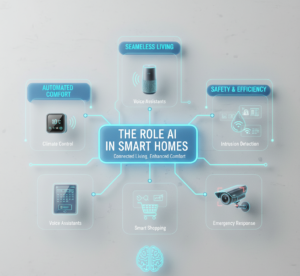
Artificial intelligence makes it possible for smart homes to perform mundane operations without any interruption. In order to optimize temperature for both comfort and energy savings, thermostats are designed to learn the habits of the households they are installed in. Depending on whether the space is occupied, the time of day, or the mood settings, lighting systems may be adjusted. Intelligent appliances, including refrigerators, ovens, and washing machines, are able to optimize their operating schedules, cut down on the amount of energy they use, and provide users notifications when repair is required. Artificial intelligence guarantees that automation seems to be organic instead than inflexible or pre-programmed by analyzing and taking lessons from the patterns of human behavior.
Automated Speech Recognition and Conversational Agents
The introduction of voice-controlled artificial intelligence (AI) assistants such as Apple’s Siri, Amazon’s Alexa, and Google Assistant has completely changed the way that people engage with smart gadgets. They are able to read instructions that are written in natural language, respond to queries, manage appliances, and even interface with apps that are provided by third parties. Advanced artificial intelligence assistants are capable of going beyond basic functions such as managing calendars, sending reminders, and providing tailored recommendations based on previous actions, which allows for more streamlined and intuitive everyday life.
Capabilities for Prediction and Adaptation
Reactive automation is just one of the ways that artificial intelligence may be used in smart homes; in fact, it is becoming more and more predictive. In order to predict requirements, intelligent systems examine patterns of past use. Artificial intelligence, for instance, is able to prepare ovens in accordance with dinner timings, modify lighting levels in response to variations in daylight hours due to the seasons, and even recommend grocery store replenishments before stocks are depleted. This capacity for prediction improves comfort, convenience, and efficiency in daily living.
Surveillance and Home Security
Artificial intelligence makes it possible to provide more intelligent monitoring and danger identification, which results in a considerable improvement in home security. False alarms may be minimized by the use of cameras with computer vision, which are capable of distinguishing between intruders, family members, and pets. Artificial intelligence is capable of identifying abnormal behavior, keeping track of entry points, and delivering immediate notifications to homeowners or emergency response teams. An intelligent and responsive security environment is created via the combination of facial recognition, motion tracking, and behavior analysis.
Sustainability and Energy Efficiency
Artificial intelligence provides added value in the field of energy management, among other areas. Smart meters, sensors, and linked appliances are able to gather data on the amount of energy that is being used. The information is analyzed by artificial intelligence algorithms in order to maximize utilization, find areas of inefficiency, and provide modifications that might help save energy. This has the effect of lowering utility expenses and bolstering sustainability via the reduction of wasteful energy usage.
Healthcare Surveillance and Assisted Living Services
Health monitoring is also supported by artificial intelligence (AI)-powered gadgets in smart homes. Connected gadgets and wearable sensors are capable of monitoring vital indicators, sleep patterns, and levels of physical activity. Artificial intelligence (AI) is capable of detecting falls, monitoring medication adherence, and even notifying caregivers in the event of an emergency for elderly or fragile people. The safety, freedom, and proactive health management that are made possible by these qualities are particularly important in the context of the home setting.
Integration Between Different Platforms and Devices
In order for connected living to work, gadgets must communicate with one other in a smooth manner. Artificial intelligence (AI) functions as the central coordinator, integrating a variety of different systems, including lighting, heating, ventilation, and air conditioning (HVAC), security, and entertainment. Intelligent home systems employ artificial intelligence to bring these different parts into harmony, which allows for consolidated management and guarantees that gadgets will react in context in a smart way rather than functioning independently.
Things to Take Into Account and Potential Problems
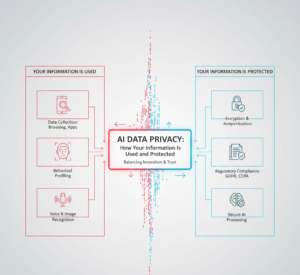
Concerns regarding data privacy, security, and system stability are raised by the use of artificial intelligence in smart homes, even if it has its advantages. Because connected devices gather personal information that is sensitive, it is necessary to implement strong encryption, safe authentication, and privacy-conscious artificial intelligence architecture. It is the responsibility of users to be informed about any possible weaknesses, making sure that intelligent systems are consistently upgraded and scrutinized for any threats to their security.
Living in a Connected World in the Twenty-First Century
The customization, context-aware automation, and predictive intelligence of artificial intelligence (AI) in smart homes will continue to grow in the future. The integration of Internet of Things (IoT) networks, vehicle-to-home technologies, and smart cities will further broaden the concept of linked living. As artificial intelligence continues to advance in its ability to comprehend human behavior and environmental context, residences will transition from reactive spaces into proactive, intuitive surroundings that dynamically adapt and predict need.
Artificial intelligence is reshaping the concept of what it means to reside in a smart house. Artificial intelligence (AI) is able to convert regular living spaces into intelligent settings that improve quality of life, comfort, and efficiency by using a combination of automation, predictive intelligence, customized experiences, and security.